23/11/2026
The Dinner Test: Why Boards Mistake Composure for Readiness in CEO Selection
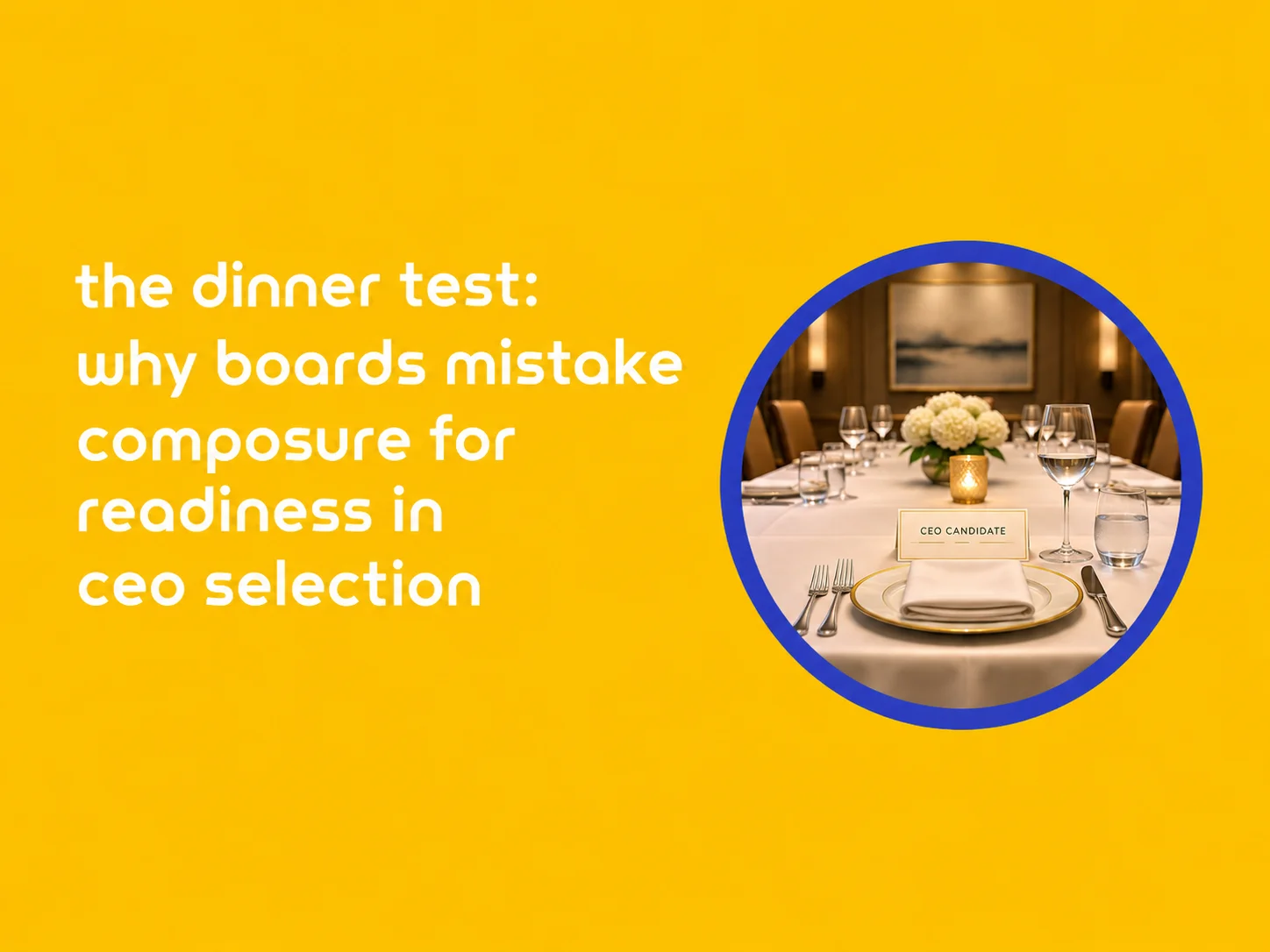
Picture the night before the board makes its decision. The formal interviews are done, the strategy presentation delivered, the spreadsheet of track records memorised. What remains is dinner: wine chosen without fuss, a self-deprecating story about a past misstep, a hard question deflected with warmth rather than defensiveness. By the time coffee arrives, most board members have quietly decided. That dinner, more than anything in the data room, is often where the appointment is actually made.
Why retention matters
BCG's recent analysis of what boards expect from CEO candidates (BCG, 2026) captures this candidly, drawing on interviews with sitting board members from companies including AB InBev, Dollar Shave Club, Swiss Re and Foot Locker. Its central finding is that boards want qualities that look contradictory but are not: a track record of hitting targets alongside a pioneering vision, the ability to forge followership while making hard personnel calls, humility paired with gravitas. One figure stands out: BCG reports that 20 to 30 percent of senior executives typically leave within a new CEO's first year, which is why retention and people development weigh so heavily in how boards judge a candidate.
Performance over gravitas
This is a genuinely useful map of what boards say they want. The difficulty lies in how they say they find it. Much of the evidence relied on, by BCG's own account, comes from informal conversations and the elusive "wow factor" a candidate projects in a room. Kimberly Underhill, quoted in the piece, says plainly that informal conversations "tell you who someone is, not just what they've done." That is precisely the problem. Composure at dinner, warmth under social scrutiny, a well-told story about failure: these are real signals, but they are also exactly the behaviours that confidence and charisma can counterfeit convincingly over a single evening with people who already want to like the candidate. Gravitas, as BCG describes it, is observed as a performance. It is rarely tested against how someone behaves when the stakes are theirs alone, under sustained pressure, across many decisions rather than one dinner.
The qualities boards are right to want are being assessed through the format least equipped to reveal them reliably. Self-awareness, resilience under pressure, how someone actually responds to challenge rather than how well they narrate having responded to it: these are patterns of behaviour, not dinner-table performances. They become visible through structured, validated assessment of personality and leadership style, used alongside the track record and the interviews, not instead of them. This does not replace board judgement. It gives that judgement something steadier to stand on than a single evening's impression, and it reduces the chance that charisma is mistaken for readiness at the exact moment an organisation can least afford that mistake.
Making the right decision
For boards running a succession process, the honest question is not whether BCG's list of qualities is right. It largely is. The question is whether an evening of good company under pressure tells them anything more reliable than the candidate's ability to be good company under pressure, and what else is available to see past the performance before the decision is made. This is where structured executive assessment, combining psychometric insight with behavioural evidence, can help boards look beyond first impressions and make more informed leadership decisions.
For boards running a succession process, the honest question is not whether BCG's list of qualities is right. It largely is. The question is whether an evening of good company under pressure tells them anything more reliable than the candidate's ability to be good company under pressure, and what else is available to see past the performance before the decision is made.